by admin | Feb 20, 2025 | All things Antiques, Design
Why antiques are making a strong, yet subtle comeback in design.
Antiques have always had a special kind of charm. With their rich history and exceptional craftsmanship, they offer something modern pieces often can’t—character and uniqueness. These days, antiques are making a noticeable comeback in traditional home design, even though the economy is tight, and many of the people who love them tend to be older. But what’s driving this resurgence? There are a few key reasons, from sustainability to a desire for more personal and meaningful spaces.
First off, sustainability plays a major role. In today’s world, where we’re all more conscious of the environment, buying antiques is seen as a way to recycle and repurpose. These pieces have already been made, so no new manufacturing is required, and many antiques are crafted from materials like solid wood and metal that stand the test of time. In an era of fast furniture that doesn’t last, owning an antique means you’re investing in something that could last for generations.
People are craving more personal touches in their homes. With so much mass-produced furniture out there, it’s hard to find items that feel truly unique. Antiques, though, bring individuality to a space. Whether it’s a vintage chest passed down through family or a one-of-a-kind mirror from a hidden shop, these items tell a story. They give your home a personality and a connection to the past that modern pieces just can’t replicate.
There’s also a sense of nostalgia at play. After spending more time at home in recent years, people want their spaces to feel comfortable, cozy, and inviting. Antiques, with their traditional and timeless designs, fit perfectly into this vision. They create an atmosphere of warmth and familiarity—something that’s been lost in the world of minimalist, contemporary interiors.
Interestingly, younger generations are also getting in on the antique trend. Millennials and Gen Z are discovering the beauty and craftsmanship of vintage pieces, hunting for treasures at estate sales and auctions. It’s no longer just about nostalgia; it’s about valuing quality and history, and finding furniture that feels one-of-a-kind.
Ultimately, antiques are making a strong and subtle comeback because they never went away and they offer so much more than just a functional item. They bring a sense of history, uniqueness, and quality that modern mass-produced furniture simply can’t compete with. In a world that’s often focused on quick fixes and trends, antiques remind us of the value of lasting, meaningful pieces. There is a story behind just about every piece on our showroom floor. Feel free to reach out for the back story and history on any piece that catches your interest on our showroom floor or online store. We’d love to hear from you!
Tod Carson
by admin | Sep 18, 2024 | All things Antiques
The History Behind Iconic Antique Styles: Directoire
The world of antiques is rich with history, each piece telling a unique story of its time. Among the most captivating styles is my personal favorite: the Directoire period, which emerged in France from 1795 to 1805-ish. This era not only reflects the aesthetic preferences of its time but also encapsulates a significant transition in French society following the tumult of the Revolution.
The Historical Context
The Directoire period took its name from the French government known as the Directory, which governed France after the fall of the Revolutionary government. This era was marked by political instability and a desire for stability and elegance in everyday life. The revolution had overturned the monarchy, and the people were yearning for a return to sophistication and order, which influenced the art and furniture styles of the time.
Characteristics of Directoire Style
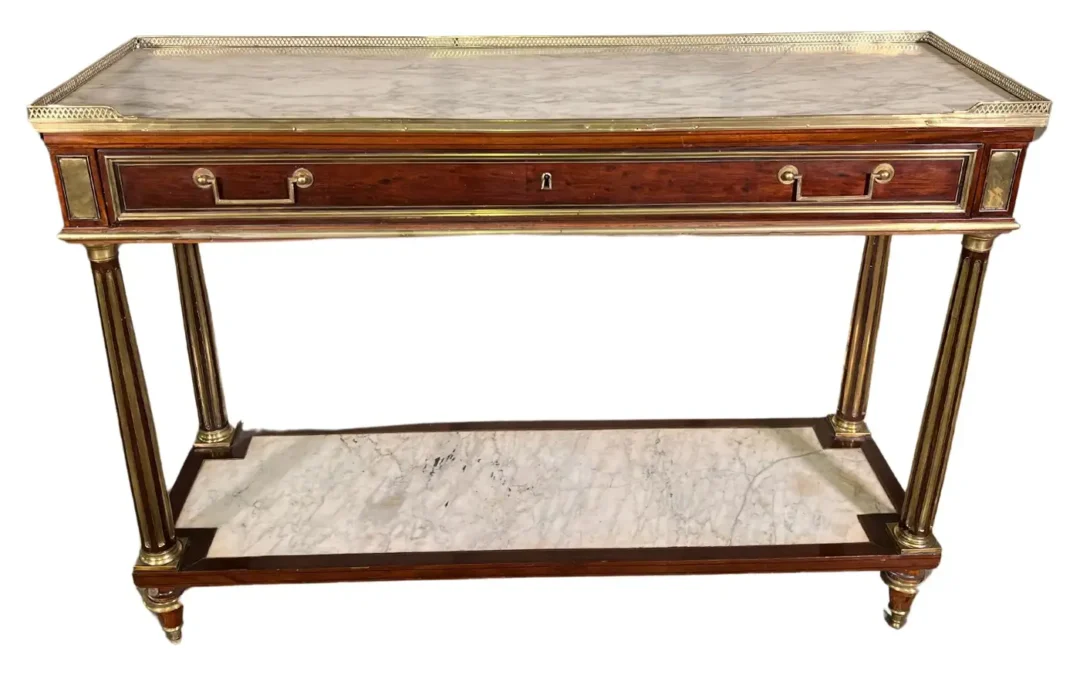
Directoire furniture is distinguished by its neoclassical influences, a nod to ancient Roman and Greek designs. Unlike the opulence of the preceding Louis XVI style, Directoire embraced simplicity and symmetry. Common materials included mahogany and walnut, often enhanced with intricate carvings and gilding. Furniture pieces like chairs and tables featured straight lines and geometric forms, reflecting the clarity and rationality of the age.
One notable characteristic of Directoire design is the use of motifs inspired by antiquity, including clean lines, fluted columns, laurel wreaths, and Egyptian elements, reflecting the European fascination with the ancient world. This fascination was partly fueled by Napoleon’s military campaigns, which brought Egyptian artifacts and motifs back to France, infusing them into the art and furniture of the time.
Furniture and Decorative Arts
Directoire furniture was not only functional but also a form of artistic expression. Iconic pieces included fauteuils (armchairs) and bergères (cushioned armchairs) that often featured bold upholstery and elegant frames. Tables were designed with clean lines and were often adorned with painted or gilded decorations.
In decorative arts, the Directoire period also saw a revival of interest in porcelain and ceramics. Factories began producing tableware with classical motifs, which were highly sought after by the burgeoning middle class eager to showcase their refined tastes.
The Influence of Directoire on Modern Design
The Directoire style laid the groundwork for subsequent movements, particularly the Empire style that followed. While Empire furniture was more ornate and grand, it still carried the neoclassical spirit established during the Directoire period. Elements such as the use of classical motifs and a focus on symmetry remained integral in the evolution of furniture design.
Today, the Directoire style is appreciated for its elegance and restraint, making it a popular choice for interior designers looking to blend classical elements with contemporary aesthetics. Many modern furnishings draw inspiration from the clean lines and timeless elegance of Directoire pieces, ensuring that this style continues to resonate.
Collecting Directoire Antiques
For collectors, Directoire antiques offer a fascinating glimpse into a transformative period in French history. When acquiring Directoire pieces, it is essential to look for authenticity, paying attention to craftsmanship, materials, and the presence of typical motifs. The value of these antiques can vary significantly based on condition, provenance, and rarity, making each piece a potential treasure.
The Directoire period stands as a testament to resilience and a quest for elegance amidst chaos. Its enduring influence on furniture design and decorative arts makes it an essential topic of exploration for antique enthusiasts. By understanding the history and characteristics of Directoire style, collectors and admirers can better appreciate the artistry and cultural significance behind these iconic pieces. Pease browse our online or showroom inventory to discover your favorite Directoire piece.
by admin | Jul 24, 2024 | All things Antiques
by admin | Apr 24, 2024 | All things Antiques
France has always been a symbol of elegance, sophistication, and artistic innovation. Its influence on furniture and decorative arts is undeniable. From the opulent Baroque period to the sleek glamour of Art Deco, French furniture styles have shaped the world of antiques. In this guide, we explore the most iconic French furniture movements. Each style showcases timeless beauty, exquisite craftsmanship, and enduring appeal.
Baroque Splendor
Baroque design emerged in 17th-century France. It is known for grandeur, drama, and ornate details. Influenced by Louis XIV, the Sun King, Baroque furniture featured bold carvings, gilding, and rich fabrics.Classic examples include large armoires, intricately carved commodes, and grand mirrors. These pieces demonstrate the height of French craftsmanship and the opulence of the era.
Rococo Romance
Rococo followed Baroque in 18th-century France. It introduced lightness, elegance, and playful decoration. Curved lines, asymmetrical shapes, and natural motifs—like flowers and shells—define the style.Louis XV-style armchairs, delicate console tables, and whimsical commodes capture Rococo’s charm. This style is romantic, airy, and highly collectible in French antique furniture today.
Neoclassical Refinement
By the late 18th century, Neoclassical design became popular. Inspired by ancient Greece and Rome, this style emphasized symmetry, clean lines, and restrained ornamentation.French Neoclassical furniture, often associated with Louis XVI, includes elegant bergères, marble-topped guéridons, and desks with tapered columns. These pieces showcase simplicity and classical elegance in French furniture styles.
Art Nouveau Innovation
In the late 19th and early 20th centuries, Art Nouveau broke away from traditional design. It focused on organic shapes, flowing lines, and nature-inspired motifs.French Art Nouveau furniture used materials like bentwood, stained glass, and marquetry. Émile Gallé’s floral designs and Hector Guimard’s Paris Métro entrances are iconic examples of this creative movement.
Art Deco Glamour
Art Deco emerged in 1920s France. It celebrated modern luxury with geometric shapes, bold lines, and high-quality materials.French Art Deco furniture often featured lacquered finishes, exotic woods, and chrome accents. Designers like Émile-Jacques Ruhlmann created elegant interiors that remain highly sought after by collectors of classic French design.
Timeless Legacy
From Baroque splendor to Art Deco sophistication, each French furniture movement has left a lasting mark on antique design. French antique furniture continues to inspire collectors, interior designers, and enthusiasts around the world.
by admin | Mar 13, 2024 | All things Antiques, maintenance
by admin | Dec 13, 2023 | All things Antiques, Uncategorized
The Christmas Day Conspiracy: Napoleon’s Brush with Death”
In the annals of history, Christmas Day is typically associated with joy, celebration, and peace. However, in 1800, the festive season took a dark turn when a sinister plot unfolded against the formidable French leader, Napoleon Bonaparte. On that fateful day, as Europe reveled in holiday cheer, a group of conspirators sought to alter the course of history.
The elaborate plan was set into motion as Napoleon made his way to the Notre-Dame Cathedral for the Christmas Day celebration. Hidden among the crowd were would-be assassins, determined to end the era of the powerful military strategist. As Napoleon entered the cathedral, the tension reached a climax. It was then that an unexpected twist occurred—rumors suggest that the gun intended for the fatal shot misfired or that the assailant lost his nerve in the critical moment.
The failed attempt on Napoleon’s life not only marked a pivotal moment in European history but also underscored the volatile nature of political landscapes during the early 19th century. The incident served as a catalyst for Napoleon’s rise to greater prominence and power, ultimately shaping the destiny of nations. As we reflect on the events of that Christmas Day, history reminds us that even amidst the joyous festivities, the specter of political intrigue and power struggles can cast a long and ominous shadow.
I personally love French Antiques from the Napoleonic era and the Directory and Regency eras that surround it. Art, furniture and lighting that was created during these periods are exquisite, detailed and high quality. They fit seamlessly and elegantly in any scheme.
For the month of December and January we are offering %15 off of any in store or online orders. Please use HOLIDAY code at checkout.
From our family to yours, have a warm, wonderful Holiday and Happy New Year!
~Tod Carson