
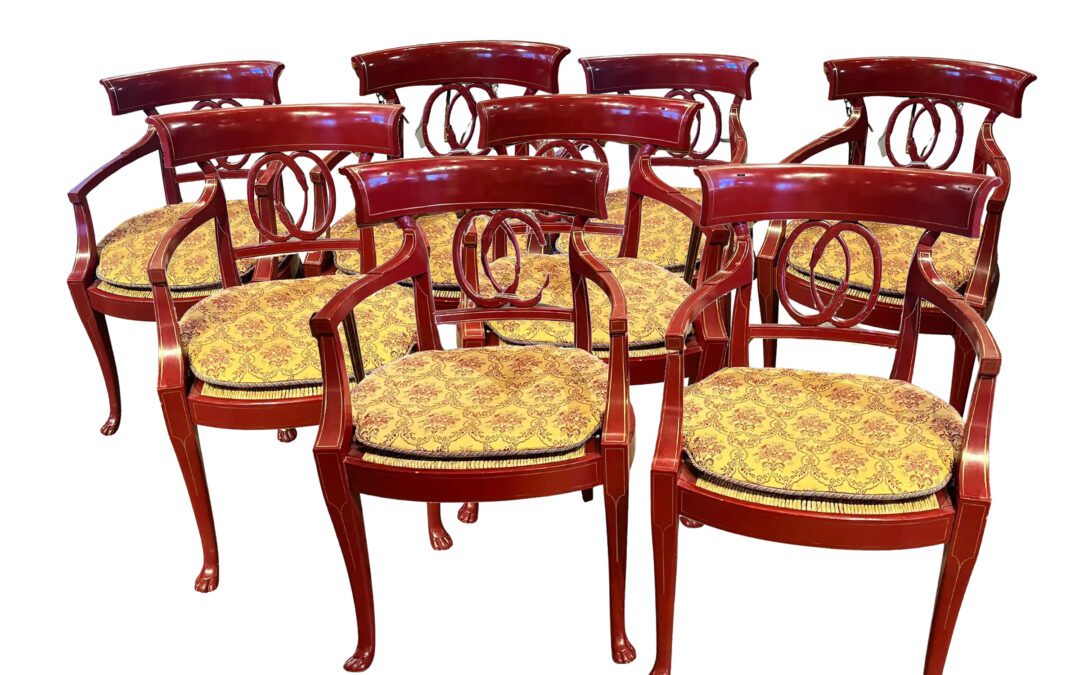
Specifying Antiques for Hospitality Projects: Sourcing at Scale for Hotels and Resorts

Specifying Antiques for Hospitality Projects: Sourcing at Scale for Hotels and Resorts

When a hotel designer calls me, the first question is rarely “what’s the most beautiful piece you have?” It’s “how many can you get me, and will they survive a thousand guests?” Hospitality is a different discipline from residential collecting. A Louis XVI bergère in a private salon gets sat in a few times a week; the same chair in a resort lounge might see fifty guests a day, luggage carts, spilled cocktails and the occasional child treating it like a jungle gym. I always tell clients that specifying antiques for hospitality starts with honesty about traffic, and only then moves to style.

Sourcing at scale is the real challenge. Matched sets were common in the 18th and 19th centuries (workshops like Gillows of Lancaster built dining chairs by the dozen for country houses), but surviving sets of twelve or more are rare and priced accordingly. For a restaurant or ballroom, I often recommend a harmonized approach instead: pieces from the same period and region that share wood, scale and leg profile, rather than chasing a perfect match. A run of Directoire side chairs in fruitwood, unified by one custom upholstery, reads as a deliberate collection, not a compromise. Save the true one-of-a-kind statements (a gilded console, a monumental trumeau mirror, a pair of bronze doré candelabra) for the lobby, the reception desk and the suite entries, where guests pause long enough to notice.

Durability and code compliance are where antiques and commercial specs have to meet in the middle. Most hospitality projects require contract-rated, flame-resistant textiles, so reupholstery is almost always part of the budget. Joinery matters more than finish: a mortise-and-tenon frame that’s been properly re-glued with hide glue will outlast most new contract seating, while a chair held together with old screws and corner blocks will fail by the second season. I’d rather spend a client’s money on a sound frame with a tired finish than a pretty one hiding loose joints. Case pieces need the same scrutiny. Veneers lift in heavily air-conditioned rooms, so I steer marquetry and fragile lacquer away from high-touch areas and toward walls where they can be admired without being leaned on.

Finally, plan the timeline like a sourcing project, not a shopping trip. Assembling forty period-appropriate pieces can take months, and restoration adds more. Bringing a dealer in at schematic design, not two weeks before opening, leaves time to source, condition and photograph every piece for the FF&E schedule. If you’re specifying for a hotel, resort or restaurant, browse our collection with your floor plan in hand; it’s the fastest way to see what scale is realistically available. A new building can buy everything except a past. Antiques are how you borrow one.

-Tod Carson

Why antiques are making a strong, yet subtle comeback in design.

Why antiques are making a strong, yet subtle comeback in design.

Why antiques are making a strong, yet subtle comeback in design.

Antiques have always had a special kind of charm. With their rich history and exceptional craftsmanship, they offer something modern pieces often can’t—character and uniqueness. These days, antiques are making a noticeable comeback in traditional home design, even though the economy is tight, and many of the people who love them tend to be older. But what’s driving this resurgence? There are a few key reasons, from sustainability to a desire for more personal and meaningful spaces.

First off, sustainability plays a major role. In today’s world, where we’re all more conscious of the environment, buying antiques is seen as a way to recycle and repurpose. These pieces have already been made, so no new manufacturing is required, and many antiques are crafted from materials like solid wood and metal that stand the test of time. In an era of fast furniture that doesn’t last, owning an antique means you’re investing in something that could last for generations.

People are craving more personal touches in their homes. With so much mass-produced furniture out there, it’s hard to find items that feel truly unique. Antiques, though, bring individuality to a space. Whether it’s a vintage chest passed down through family or a one-of-a-kind mirror from a hidden shop, these items tell a story. They give your home a personality and a connection to the past that modern pieces just can’t replicate.

There’s also a sense of nostalgia at play. After spending more time at home in recent years, people want their spaces to feel comfortable, cozy, and inviting. Antiques, with their traditional and timeless designs, fit perfectly into this vision. They create an atmosphere of warmth and familiarity—something that’s been lost in the world of minimalist, contemporary interiors.

Interestingly, younger generations are also getting in on the antique trend. Millennials and Gen Z are discovering the beauty and craftsmanship of vintage pieces, hunting for treasures at estate sales and auctions. It’s no longer just about nostalgia; it’s about valuing quality and history, and finding furniture that feels one-of-a-kind.

Ultimately, antiques are making a strong and subtle comeback because they never went away and they offer so much more than just a functional item. They bring a sense of history, uniqueness, and quality that modern mass-produced furniture simply can’t compete with. In a world that’s often focused on quick fixes and trends, antiques remind us of the value of lasting, meaningful pieces.  There is a story behind just about every piece on our showroom floor.  Feel free to reach out for the back story and history on any piece that catches your interest on our showroom floor or online store.  We’d love to hear from you!

Tod Carson